Fill Before You Fancy It: A Rural Fuel Plan for Weekend Rides
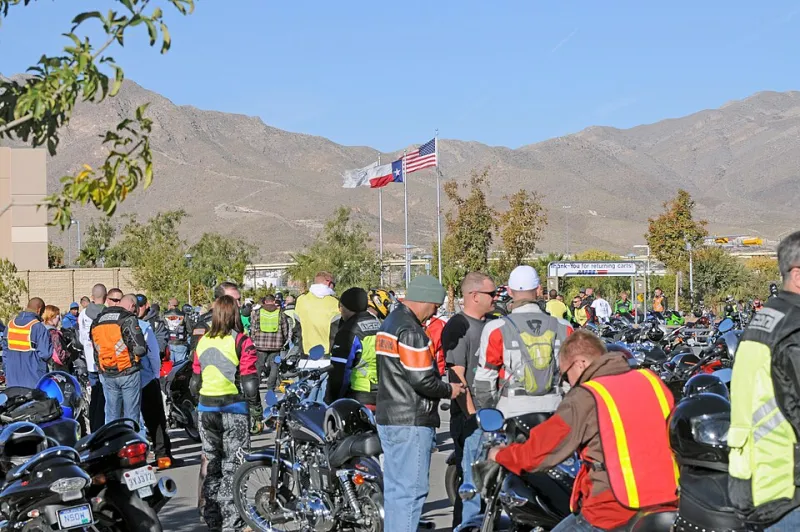
Photo: Sgt. Richard Andrade, Public domain, via Wikimedia Commons
There's a particular kind of silence on a back road in the North York Moors when your reserve light comes on. It isn't peaceful. It's the sound of you doing mental arithmetic while trying to enjoy a view you've paid good money to reach. The nearest town is eleven miles away, the nearest filling station might be in that town, and the only thing you know for certain is that the pub you passed two miles back definitely didn't sell petrol.
Rural fuel planning isn't glamorous. It doesn't make for a great Instagram caption. But it's the difference between a cracking Sunday loop and a下午 spent ringing a recovery firm from a lay-by. If you ride beyond the ring road, it's worth treating fuel as part of the route, not an afterthought.
The reserve light is not a plan
Most bike fuel gauges are optimistic. Some are openly dishonest. The reserve light usually means "you have enough to start looking properly", not "you have enough to reach the next town because it looks close on the map". On a smaller tank — a 12- or 14-litre bike, say — reserve might be 30 miles at a steady 60mph. Add a headwind, a pillion, a loaded top box and a bit of enthusiastic throttle out of corners, and that 30 becomes 22. Then you miss the turning and it becomes 15.
So don't plan to the reserve. Plan to a comfortable margin. On a rural ride I like to arrive at a pump with at least a quarter tank showing, and I'd rather stop twice than gamble once. It sounds fussy. It isn't. It just means you're not the person holding up a group ride because you wanted to "see how far it would go".
Work out your real range, not the brochure figure
The only figure that matters is the one your bike actually delivers. Fill the tank to the same point twice — brim-to-brim, ideally at the same pump — note the miles on your trip meter, then refill and do the sums. That gives you a real-world mpg for your riding, not the fantasy number from a press launch in Spain.
Do it again on a wet day, with a headwind, or two-up. You'll probably find a 10–15% difference. That's your planning figure. If your bike does 55mpg on a good day, plan for 45. If it does 45, plan for 38. It's not pessimism; it's just arithmetic with better manners.
Also remember that modern petrol contains ethanol. E10 is standard in the UK now, and while most bikes run fine on it, it can slightly affect economy and it doesn't like sitting in a tank for months. For a weekend ride it's irrelevant. For a bike that lives under a cover from November to March, it's a reason to start the season with fresh fuel rather than the dregs of last autumn.
Map the pumps before you map the fun
Apps are useful, but they're not magic. Google Maps and Waze will show filling stations, and they're decent at flagging whether a place is open. PetrolPrices is handy for comparing costs, though rural stations are often missing or out of date. What apps are bad at is telling you whether the pump actually works, whether the shop closes at 1pm on a Sunday, or whether the station has been a building site since March.
So use the app to find candidates, then use your eyes and a bit of common sense. A village garage with two pumps and a hand-painted sign is more likely to be open than the app suggests, but it's also more likely to close for lunch. A supermarket filling station on the edge of a market town is usually reliable, but it might be a five-mile detour off your lane. That's fine — build the detour into the route. A fuel stop is a legitimate reason to stop.
If you're heading somewhere genuinely remote — mid-Wales, the Scottish Highlands, the emptier parts of Devon and Cornwall — screenshot your planned stops before you leave. Signal is a rumour in some of these places, and a phone that's searching for a 4G mast is also a phone that isn't showing you the map.
Read the road signs properly
Rural signage is patchy, but it's not useless. "Fuel" signs on A-roads usually mean a station within a mile or two, but they don't tell you the price or whether it's 24-hour. "Services" on a dual carriageway can mean a full facility or a single burger van with a portaloo. Treat any sign as a hint, not a guarantee.
The better clue is often the village itself. A garage with a forecourt on the main road through a small town is usually a safe bet. A garage tucked down a side street with a hand car wash and a stack of tyres outside is probably still trading. A garage with boarded windows and a "closed until further notice" sign is not. Obvious, yes, but you'd be surprised how many riders sail past the obvious because the app said the next one was only 18 miles away.
When the only pump for miles is shut
It happens. Power cuts, card machine failures, a delivery that didn't arrive, a family funeral, a refurbishment that's run three weeks over. The station is there, the nozzle is there, and the screen says "pay at kiosk" while the kiosk is dark.
First, don't panic. If you're on reserve, you've got options. A nearby town — even a small one — often has a second station, sometimes a supermarket one. A pub or village shop may know who's open. A passer-by in a van probably knows better than your phone does.
Second, carry a card and a bit of cash. Rural pumps are increasingly card-only, but when the card reader dies, cash is still king. A tenner in your wallet won't fill the tank, but it might get you to the next town.
Third, if you're genuinely stuck, ask. Bikers are usually happy to help, and so are plenty of non-bikers. I've known a garage owner open up early because a rider was stranded, and I've known a farmer sell a couple of litres from a can. You can't plan for goodwill, but you can make it more likely by being decent about it.
A quick routine that saves the drama
Before any rural ride, fill up near home. Note your trip meter. Pick two possible fuel stops on the route — one at roughly the halfway point, one as a backup — and check their opening hours if you can. Carry a card and some cash. Arrive at your first planned stop with a quarter tank or more, not a flickering light.
It takes five minutes. It won't make the ride any less fun. If anything, it makes it better, because you're not spending the best part of the afternoon wondering whether the next village has a pump. The lanes are quiet enough without adding that particular worry.