The Handshake Under the Ramp: Why Older Bikes Deserve a Good Independent Mechanic
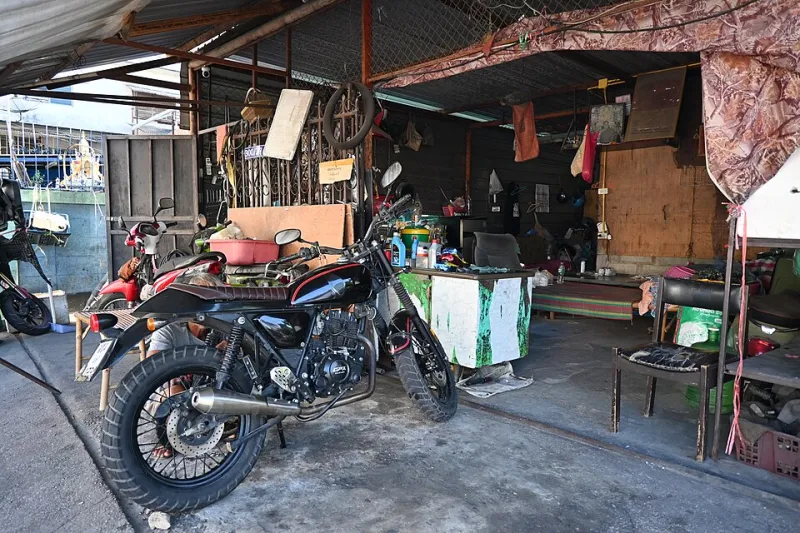
Photo: PattayaPatrol, CC BY-SA 4.0, via Wikimedia Commons
The moment your bike falls out of warranty, something changes. The dealer who sold it to you is still perfectly pleasant, but the maths start to shift. An older bike needs someone who will listen to the rattle, not just plug in a laptop and read a code. That is where the independent mechanic comes in, and if you find a good one, you will wonder why you waited so long.
I am not here to paint main dealers as villains. They have the franchise tools, the warranty work and the model-specific training, and for a new or nearly new bike they often make sense. But once a bike is five, ten or fifteen years old, the dealer model can feel like using a wedding caterer to make beans on toast. The skills are there, but the overheads and the priorities are not always pointed at your 2008 hack.
What a main dealer is actually for
A franchise dealer is built around new bikes, finance, servicing schedules and warranty claims. That means manufacturer software, trained technicians and a parts counter that can order the right gasket. It also means labour rates that reflect a glass showroom, a coffee machine and a service adviser who has to hit targets.
None of that is evil. It is just a different business. If your bike is under warranty and something major goes wrong, you want the dealer involved. If it is an older machine with a noisy cam chain and a previous owner who thought servicing meant topping up the oil, you want someone who has seen that exact model before and knows where the corners are usually cut.
What independents do better
A good independent knows older bikes in the way a local butcher knows cuts of meat. They remember the common failures, the awkward fasteners, the parts that are no longer available and the workarounds that actually last. They are more likely to repair a component than replace an entire assembly, and more likely to source a good used part when a new one costs more than the bike is worth.
They also tend to talk to you like a human. You can ask what went wrong, see the old parts, and get an honest answer about whether a repair is worth doing. That is not a small thing. On an older bike, the difference between a £180 fix and a £700 bill is often a mechanic who knows when to stop.
The relationship matters too. A good independent remembers your bike between visits. They know it has a slight weep from the rocker cover, that the rear brake likes a bleed, and that the previous owner fitted a cheap rectifier. That history is worth more than a shiny reception area and a complimentary biscuit.
How to spot a genuinely good workshop
Ignore the showroom. Look at the workshop. A good outfit is busy but organised. There are labelled parts trays, a torque wrench within reach, service data on the bench and oil disposed of properly. It does not need to be spotless, but it should not look like a skip with a ramp in it.
Ask what they ride. Ask what they specialise in. Ask whether they have worked on your model before and what they know about its weak points. A good mechanic will answer without arrogance. They will also ask you questions: what the bike does, when it does it, what has already been tried, and whether you have a budget in mind.
Look for signs of proper process. Are estimates written down? Do they call before doing extra work? Is there a clear policy on old parts? Do they have insurance and a proper booking system? A workshop that cannot answer basic questions before you hand over the keys is unlikely to get better once your bike is on the ramp.
The questions to ask before handing over the keys
Before you leave the bike, have a short, polite interrogation. It is not mistrust; it is the same as asking a builder when they will finish.
- What is your labour rate, and is there a minimum charge?
- Can you give me a written estimate, and will you call before going over it?
- Have you worked on this model before? What are the known issues?
- Do you use genuine, pattern or used parts, and can I choose?
- Will you keep the old parts for me to see?
- What warranty do you give on the work?
- How long will you need the bike, and is it stored inside?
- Do you do MOTs in-house or farm them out?
- What happens if a bolt snaps or the job turns into a bigger repair?
A good workshop will not be offended by any of that. A bad one will get vague, defensive or pushy. That tells you plenty.
The agreement works both ways
A good mechanic is not a magic service you consume. It is a relationship. Describe the symptoms properly. Bring the service history, even if it is a scruffy folder of receipts. Tell them your budget and what you use the bike for. If you commute on it, say so. If it is a weekend toy, say that too.
Do not hover over the ramp. Do not ask them to 'just make it pass the MOT' and then act surprised when they find a brake disc like a crisp. Pay promptly, book ahead, and follow the advice you asked for. The riders who get the best out of an independent are the ones who treat the workshop like a long-term partnership rather than a vending machine.
Red flags worth walking away from
Be wary of a workshop that will not give an estimate, will not show old parts, or promises a full rebuild for a suspiciously low price. Be wary of constant upselling, poor reviews that all mention the same problem, and anyone who seems annoyed by basic questions. A good mechanic does not need to be your friend, but they should be straight with you.
Older bikes are not disposable. They are the reason many of us ride in the first place, and they deserve someone who will look after them properly. Find that person, ask the right questions, and treat them well. The handshake under the ramp is still one of the best deals in motorcycling.