Buy Cheap, Ride Ugly: Why a Secondhand Winter Hack Is the Smartest Money You'll Spend
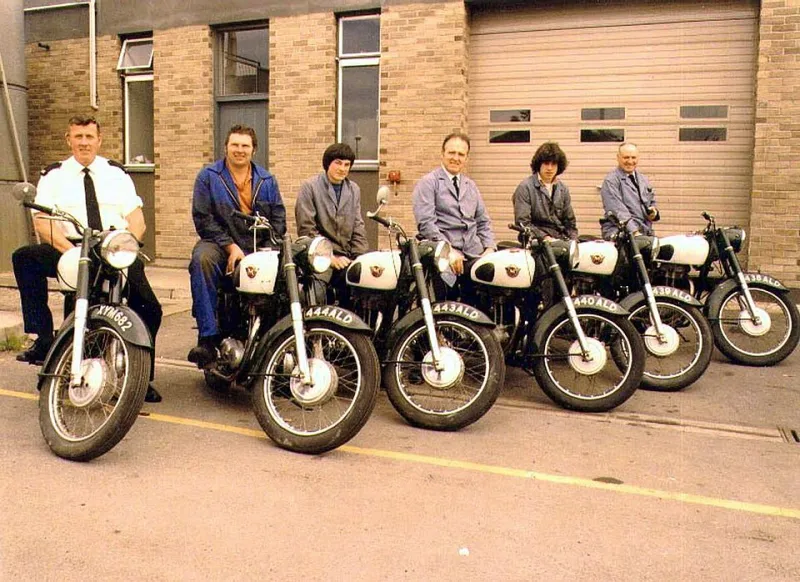
Photo: Dave Conner from Inverness, Scotland, CC BY 2.0, via Wikimedia Commons
By the time the gritters are doing their nightly rounds, most of us have already made the decision. The good bike goes under a sheet in the garage, the battery comes out, and four months of sitting in traffic in the car begins. Or you keep riding, and watch the finish you spent years protecting develop a fetching white fur around the fork lowers.
There is a third way, and it's the one I'd argue for every single time: buy a cheap second bike, accept that it's going to have a grim winter, and let it take the damage instead of the one you actually love.
The maths is not complicated
Say you own a tidy £4,000 machine that you'd quite like to still be tidy in five years. A winter of daily commuting on salted B roads does a very specific kind of damage — fasteners, caliper pistons, fork lowers, the rear shock, the paint on engine cases, the brake pipe unions you can't even see. None of it is dramatic. All of it is expensive to put right, and all of it shows the moment you come to sell.
A £700 hack with £300 of fettling takes exactly the same punishment and loses, realistically, a couple of hundred quid in value. That's the entire trick. You are not buying a bike, you're buying insurance against corrosion.
What actually matters, and what absolutely doesn't
Scruffy is fine. Scruffy is good, in fact — it keeps the price down and it means you won't cry when a van nudges it in a car park. What matters is a short list: does it start reliably, does it stop properly, does it steer straight, and is it legal.
Be slightly wary of the immaculate £700 bike. Bikes that cheap and that shiny usually have something to hide — a hard knock, a bent front end, a frame that's been "professionally repaired" with a rattle can. A five-minute HPI-style check and a look at the MOT history will tell you a lot before you even leave the house.
The cheapest hour you'll ever spend
The government's MOT history service is free and it is the single most useful tool in this whole process. Feed in the registration and read the advisories, not just the passes and fails.
What you're looking for: repeated advisories on the same structural item. Corrosion mentioned on a brake pipe once is fine. Corrosion flagged on the frame, the swingarm or the fork legs in 2019, 2021, 2023 and 2025 is a bike that's quietly dissolving from the inside.
Also check the mileage progression. A bike that did 4,000 miles a year and then 200 miles a year for three years has been sitting — which means old brake fluid, perished hoses, flat-spotted tyres and a fuel system full of gum. Not a dealbreaker, but budget for it.
Brakes, tyres, and the rot you can't see
Brakes first. Seized caliper pistons are the classic cheap-bike failure and they fail quietly. Push the pistons back if you can, or at least look at whether the pads are wearing evenly. Scored discs, perished rubber lines and fluid the colour of strong tea all point to a bike that's been neglected where it counts.
Tyres next. Find the four-digit date code on the sidewall. Anything over seven or eight years old should be replaced no matter how much tread is left — old rubber goes hard and gives you nothing in the cold and wet, which is precisely the conditions you're buying this bike for. Budget £150–£200 fitted for a pair on something small.
Then the corrosion tour: swingarm, subframe under the seat, the bottom of the fork legs, around the battery box, the front engine mounts. Take a small screwdriver and prod anything that looks suspect. A seller who won't let you do that is telling you something.
Insurance, tax and the dull paperwork
A second bike usually means a second policy unless your insurer does multi-bike cover — worth ringing yours before you shop around, because the difference can be significant. Remember that keeping an uninsured bike is only legal if it's declared off the road, so there's no cheeky "I'll only use it now and then" option.
On a £700 bike, fully comprehensive cover often costs more than the machine is worth. Third party, fire and theft is a reasonable compromise, as long as you understand what you're giving up. Check the insurance group and think about where it lives overnight — theft risk is priced by postcode and a cheap bike is not automatically a cheap premium.
The budget nobody mentions
Purchase price is the start, not the total. A realistic shopping list on a £700 bike: tyres £180, chain and sprockets £90 if they're tired, brake fluid and pads £50, battery £45, a can of ACF-50 and one of FS365 £30, oil and filter £35, and a decent lock £60 because your insurer will want one. That's £400–£500 on top.
Still less than what a season of salt does to a good bike's resale value. Just go in with your eyes open rather than discovering it in January.
When to walk away
- Repeated structural corrosion on the MOT record.
- A non-runner described as needing "just a battery". It never just needs a battery.
- No V5C in the seller's name, or numbers that don't match the paperwork.
- An MOT with a fortnight left and visible faults — they're selling you the problem.
- Anything advertised as a rider that's registered as spares or repair.
Living with it without being precious
Don't obsessively wash it. Blasting salty water into bearings and seals with a jetwash is worse than leaving it grubby. A cold rinse, a dry, and a regular coat of ACF-50 on the vulnerable bits from November onwards will do more than any amount of polishing.
Ignore the cosmetics. Do not ignore the brakes and tyres — those are the bits keeping you upright on a cold, greasy morning.
Getting your money back in spring
Come April, once the salt has been washed off the roads, give it one proper clean and put it up for sale with honest photos and an honest list of faults. A £700 hack that's carried you through the winter will usually fetch £500–£650 at the start of the season, when everyone suddenly wants a bike.
Call it a £150 loss on the bike. Compare that with the cost of new caliper pistons, a rear shock and a set of fasteners on the good one — and the fact that the good one is still worth what it was in October.
The sacrificial bike isn't a compromise. It's the whole point: buy boring, ride it ugly, and spend the savings on fuel and tyres.