Yellow Roads, No Signs: The Quiet Case for Britain's Unclassified Lanes
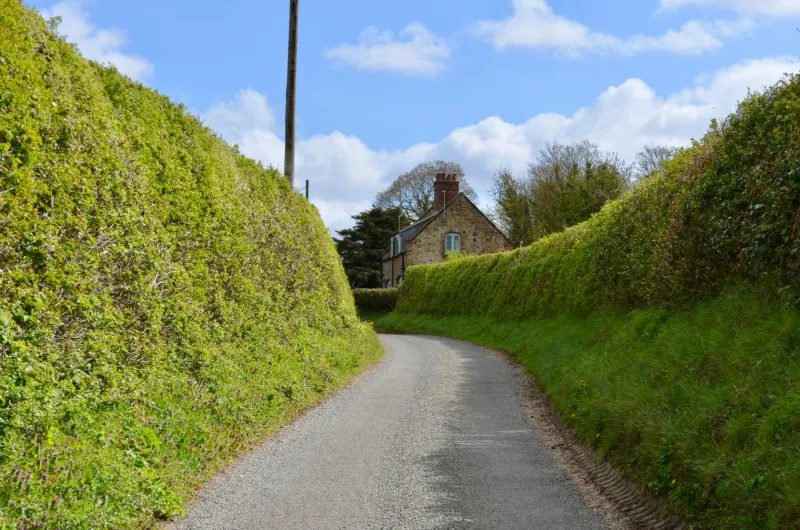
There is a particular kind of road in Britain that never seems to make the glossy route guides. It is the lane that appears on the map as a thin yellow thread, maybe with a dead-end spur or a name that sounds like a parish newsletter. No sweeping bends are advertised. No café stop is circled in red. And yet, for a certain kind of rider, these unclassified roads are the real prize.
They are not fast. They are not tidy. They are often covered in a fine line of mud, gravel or cow muck, and they demand more attention than a dual carriageway ever will. But they also take you through the kind of countryside that main roads bypass: forgotten hamlets, hedgerows tall enough to swallow the sky, and views that arrive without a lay-by or an ice-cream van in sight.
The map is the first bit of kit
Finding these lanes is not difficult, but it does require a shift in mindset. Instead of planning a route by A-road numbers, open an Ordnance Survey map or a detailed digital equivalent and look for the unclassified roads — often marked in yellow or white, depending on the scale. They are the ones without a classification number, the ones that connect a village to a farm or a B-road to a bridge.
A good starting point is to pick a market town or a quiet station and trace the lanes outward. Look for clusters of small roads between larger ones, especially where a river, a railway or a ridge forces them to wiggle. Those wiggles are usually where the good stuff lives. Cross-check with a satellite view if you can; a lane that looks promising on paper may turn out to be a farm track with a locked gate, and a lane that looks dull may run along a wooded valley for three glorious miles.
It also pays to ask locally. A mechanic, a café owner or a fellow rider at a bike night will often know the lanes that never make the internet. The best ones are usually described with a wave of the hand and the words: “You know, the one past the old chapel.”
Read the surface, not the speed limit
Unclassified lanes are not maintained to the same standard as A-roads, and that is part of their charm. But it also means you need to read the surface constantly. Look for the dark, glossy patches that suggest standing water or diesel. Look for the pale, loose gravel that gathers on bends after rain. Look for the brown smears that mean a tractor has been through recently, and the hedge clippings that can hide a pothole.
The centre of the lane is often the cleanest line, but it is also the line where you are most likely to meet something coming the other way. On narrow lanes, the best approach is to ride slightly to the left of centre, giving yourself room to move right if you need to, and to slow down before blind bends rather than braking in the middle of them. If you cannot see around a corner, assume there is a horse, a cyclist or a Land Rover just beyond it.
Mudguards, decent tyres and a relaxed grip on the bars help more than horsepower. This is not the place for chasing apexes. It is the place for reading the road three or four seconds ahead and making smooth, small adjustments.
Passing places are a conversation
Many unclassified lanes have passing places, and they are not just for cars. If you meet a vehicle coming the other way, the rule is simple: use the passing place on your side if you can, and if it is on their side, wait opposite it rather than blocking it. A wave of acknowledgement costs nothing. If you are the one who has to reverse, do it slowly and deliberately, and do not assume the other driver can see you.
With walkers, give them room and pass wide and slow. With horses, the advice is even more important: slow right down, avoid revving, and wait for the rider to signal that it is safe to pass. Do not crowd them from behind. A horse can react to a bike in ways a car driver never will, and a quiet lane is exactly where they are most likely to be.
Tractors deserve patience rather than frustration. They are working, the lane is their workplace, and they are often wider than they look. If you can see a gateway or a field entrance, pull in and let them pass. If you cannot, stay back and wait for a sensible spot. The few seconds you lose will not ruin the ride, but a close pass will ruin someone's day.
Slow is the point, not the compromise
There is a temptation to treat unclassified lanes as a challenge: how fast can you link them, how many can you tick off, how quickly can you get to the next café. But the real pleasure is in the opposite direction. These roads reward attention. They ask you to look at the hedgerow, the stone bridge, the way the light falls through the trees. They ask you to listen to the engine at low revs and feel the bike move underneath you.
That is not a compromise. It is the whole reason to be there. A fast road can be thrilling, but a narrow lane can be absorbing in a way that stays with you long after the ride. You remember the ford you did not expect, the farmyard that smelled of hay, the verge that was full of wildflowers in June. You remember the rider who waved you past, and the walker who smiled when you slowed down.
Britain is full of these roads. They are not secret, exactly, but they are easy to miss if you only follow the signs. Next time you have a free Sunday, leave the main route behind and take the yellow road. It might be slower. It might be muddier. It will almost certainly be better.