No Spare Key, No Safety Net: The Reality of Motorcycle-Only Life in Britain
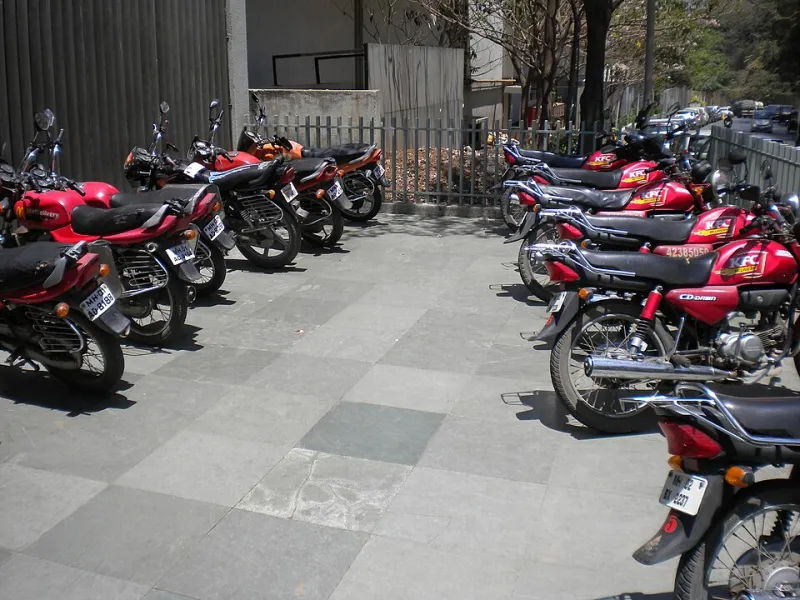
Photo: Andrew Thomas from Shrewsbury, UK, CC BY-SA 2.0, via Wikimedia Commons
There is a version of motorcycle-only life that lives in adverts: empty coastal roads, a waxed cotton jacket, and a rider who never seems to need a carrier bag. The real version involves a wet Wednesday in February, a top box full of potatoes, and a chain that needs adjusting before you can go anywhere. Neither version is wrong, but only one of them is going to get you through a British year.
Going car-free with a bike is a genuinely workable choice. Plenty of riders do it, and some do it happily for years. But it is a choice with a shape to it, and that shape is mostly logistics. If you are thinking about it — or already in the middle of it — this is what nobody puts on the poster.
The weekly shop becomes a packing puzzle
A car swallows a big shop without complaint. A bike does not. You have panniers, maybe a top box, a tank bag if you are organised, and whatever you can reasonably carry on your back. That is your boot, and it does not grow when you buy a multipack of loo roll.
The first adjustment is learning to shop like someone with limited space rather than a weekly trolley dash. Heavy items go low and central — panniers over a rucksack every time. Eggs and bread go on top, not under a five-litre bottle of screen wash. A 40-litre rucksack is useful but not a licence to buy a case of beer and a bag of compost in the same trip.
The second adjustment is frequency. Two smaller shops beat one enormous one, particularly if your local high street still has a butcher, a greengrocer and a corner shop. Delivery slots cover the bulk items, and a freezer is your friend. None of this is glamorous. All of it works.
Waterproofing is a system, not a jacket
Every rider learns that a waterproof jacket is only the first line of defence. The second is an oversuit, and the third is a change of clothes at the other end. British weather does not care about your Gore-Tex credentials when you are sitting in a queue on the A34 with rain running down your neck.
Build a system: a neck buff, a pinlock visor insert, decent gloves and a spare pair, waterproof boots that actually reach above the ankle, and a bag of dry socks in your desk drawer. Heated grips are not a luxury when you are riding through December; they are the difference between arriving at work able to type and arriving unable to feel your fingers.
If your commute ends somewhere with no drying room, a small waterproof rucksack with a dry bag inside is worth more than an expensive jacket upgrade. And a spare visor in the top box saves the day when you discover that the one you are wearing has developed a smear you cannot shift at the roadside.
Maintenance stops being a hobby and becomes a timetable
When the bike is a weekend toy, a slack chain is an annoyance. When the bike is the only way you get to work, it is a deadline. Chain adjustment, tyre pressures and brake pad checks move from "when I get a chance" to a weekly routine, ideally on a Sunday evening with a cup of tea and a torch.
Winter salt is the real enemy. ACF-50 or a similar protector on the exposed metalwork, a rinse-down when the roads have been gritted, and a close eye on brake calipers will add years to a bike that lives outside. If you are doing serious mileage, a chain oiler earns its keep, but it does not replace checking the thing.
Book services before you need them. A bike off the road for three days is a transport problem, not just an inconvenience. Learn what your bike sounds like when it is happy, and investigate the new noise before it becomes an expensive one.
The days the bike loses
There will be mornings when the bike stays put. Ice on a side road, a named storm coming in off the Atlantic, snow that turns to slush by lunchtime, or simply a forecast you do not fancy. A motorcycle-only household needs a Plan B that is not just "ride more carefully".
For some people that is the train, for others the bus, and for a lucky few it is a lift from a partner or a colleague. Budget for it. A monthly train ticket or a handful of taxi fares is not a failure of the plan; it is part of the plan. Flexible employers help, and so does knowing the first train time from your local station before you actually need it.
Breakdown cover is the other safety net. Check whether your policy covers home start and recovery to a garage you trust, not just a motorway rescue. A flat battery in a supermarket car park is a lot less dramatic when you know someone will come out.
The money is real, but so is the compromise
Bike-only life can save money. Insurance, VED, fuel, parking and congestion charges often come in well below car running costs, and filtering past a queue on the A4 is a genuine quality-of-life improvement. But the savings are not automatic. Good gear is expensive, tyres wear faster than you expect, and a bike that is used every day needs servicing more often than one that comes out on dry Sundays.
A realistic budget includes the bike, the gear, the servicing, the occasional taxi and a contingency for the unexpected. Compare that with the true cost of a car, including depreciation, and the numbers often still favour the bike. But do the sums honestly rather than romantically.
The small habits that keep it sane
Fill up at half a tank, not when the light comes on. Keep a spare pair of gloves and a bin bag in the top box. Know where you can park securely at both ends of your journey. Carry a disc lock even when you think you will not need it. Keep a note of train times and a mate who owes you a favour.
None of this makes for a dramatic story. It makes for a life that works. Motorcycle-only life in Britain is not a rejection of ordinary practicality — it is a different kind of practicality, with more layers, more checking and a bit more weather. Get the systems right and the romance takes care of itself.