The Footage Won't Argue for You: Getting Your Bike Camera Crash-Ready
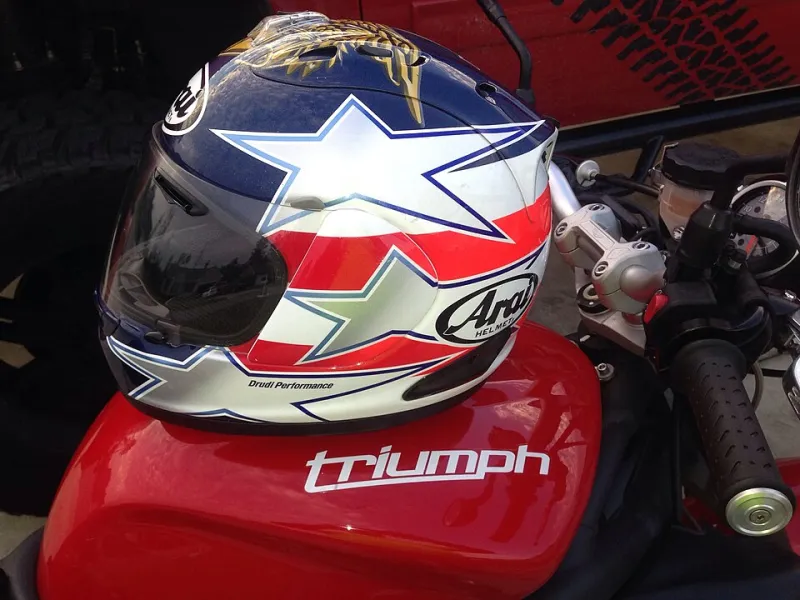
Photo: User:Slade "Crotch" Dirkach, CC BY-SA 3.0, via Wikimedia Commons
Every rider who runs a camera has had the same thought at some point: if something happens, at least I'll have it on film. It is a comforting idea. It is also only half true. A helmet or bike camera can be genuinely useful after a collision, but it is not a automatic win, a guaranteed insurance payout, or a police case in a memory card. The clip is evidence. What you do with it, and how clean it is, decides whether it helps or just adds noise.
What the camera actually proves
Footage is good at showing sequence. It can show where you were in the lane, how early you signalled, whether a driver looked your way, and what the road layout was doing in the seconds before impact. That is valuable. It can also show the sort of thing that gets remembered in a statement: a car emerging from a side road, a close pass, a brake light coming on late.
What it rarely does is settle the whole argument on its own. A clip does not automatically prove who was at fault in law, whether someone was driving without due care, or what your speed was to the nearest mile per hour. Police and insurers will look at the footage alongside statements, damage, road conditions, and the rest of the evidence. 'I've got it on camera' is a useful opening line. It is not the closing speech.
The boring settings that decide everything
Most camera problems are not dramatic. They are administrative. The card has looped over the crash. The date is stuck in 2019. The battery died two minutes before the roundabout. The mount was pointing at the sky. None of that makes for a great courtroom moment.
Before you rely on a camera, check the basics. Is loop recording on, and is the card big enough that it does not overwrite the day's commute? Is the timestamp correct, including GMT and BST? A clip with the wrong time and date is not worthless, but it is easier for the other side to question. Is the resolution sensible? A clean 1080p file with a readable number plate beats a stuttering 4K file that eats the card. Is the mount secure and aimed where it needs to be? A camera that shakes itself loose over every cat's eye is not crash-ready.
Also learn how to lock a clip. Many cameras have a button or menu option that protects the current file from looping. If you cannot do that in thirty seconds at the side of the road, practise it in your driveway. The moment after a crash is not the time to be reading a menu in the rain.
After the bang: preserve first, post later
If you are safe and the scene is under control, stop recording and preserve the file. Power the camera off properly, or remove the card if that is the maker's recommended way to avoid overwriting. Put the card somewhere secure and note the time. Do not trim the clip, add music, speed it up, or narrate over it. An edited clip is a gift to anyone who wants to argue about what was left out.
Take photos of the camera, the mount, and the screen showing the timestamp if you can. Get the police reference if officers attend. Swap details as you normally would. Then, when you get home, copy the files to a computer or cloud folder and leave the original card untouched. Keep the original. Make copies. Do not 'tidy' the folder names until the claim is finished.
Handing it over without making a mess
If the police are involved, tell the officer you have footage and ask how they want it submitted. Keep a copy for yourself and note who you gave it to and when. If your insurer asks, send the unedited clip and be clear about which camera it came from and what time it was recorded. If the other side's insurer asks, route it through your own insurer or the police rather than firing off a download link to a stranger.
Do not send a highlights reel. Do not send a clip that starts after the important bit. Do not add captions explaining what you think happened. The most useful thing you can do is provide the original file, with its metadata intact, and a short factual note of the time, location, and which bike or helmet it came from. Boring is good here. Boring is credible.
Privacy is not an afterthought
Footage of identifiable people is personal data under UK rules, and posting a crash clip on social media can create problems you did not need. Number plates, faces, and audio all count. If you want to share a clip publicly, blur the identifying details and think about whether the claim or any investigation is still live. The internet is not a courtroom, and a comment section is not a witness statement.
That does not mean you should never post a close pass or a bad bit of driving. It means the clip you send to the police and the clip you put on your feed are not the same job. One is evidence. The other is content. Keep them separate.
A five-minute pre-ride check
Once a month, format the card in the camera, not on your laptop. Check the date and time. Test the battery. Carry a spare card if you can. Make sure the mount is tight and the lens is clean. Know how to lock a file. If you run front and rear cameras, check both. It is not exciting maintenance, but it is the difference between having a witness and having a plastic box with a nice view of the sky.
A camera is a useful backup, not a substitute for riding defensively or for getting the basics right at the scene. Treat it like a spare key: nice to have, no good if you cannot find it when you need it. Set it up properly, preserve the original, hand it over cleanly, and let the footage do the quiet work.