Lean Into the Weather: A Rider’s Guide to Britain’s Gusty, Exposed Roads
There is a particular sort of British riding day when the sky looks harmless, the roads are dry, and the Met Office quietly mentions gusts of forty or fifty miles an hour. On paper, it is a normal Saturday. On an exposed moorland road or a high bridge, it feels like the bike has developed a mind of its own. The mistake many riders make is treating that wind as a wall to be fought. It is not. It is information, and the sooner you start reading it, the less dramatic the ride becomes.
The forecast tells you the average; the road tells you the truth
A weather app will give you a wind speed and a direction, usually for a town several miles from the bit of road you actually care about. That is useful, but it is not a route plan. Sustained wind is one thing; gusts are another. A steady twenty miles an hour is tiring. A twenty-mile-an-hour wind with fifty-mile-an-hour gusts is a different sport entirely, especially where the land funnels the air into a narrow gap or suddenly removes every hedge for half a mile.
Check the direction before you set off. An onshore coastal wind will push you across the road on exposed sea-front stretches. A crosswind over a moorland pass can arrive from a side valley with no warning. If the forecast mentions gusts rather than a steady breeze, assume the worst sections will be worse than the number suggests and build some slack into the day.
Read the land before the wind reaches you
Good riders scan the landscape a long way ahead, not just the next ten metres of tarmac. Tree lines, hedges, walls and buildings all create wind shadows, but they also create sudden transitions. You can be bowling along in calm air behind a drystone wall and then meet a gateway, a junction or a gap in the trees where the full force of the wind hits you at once.
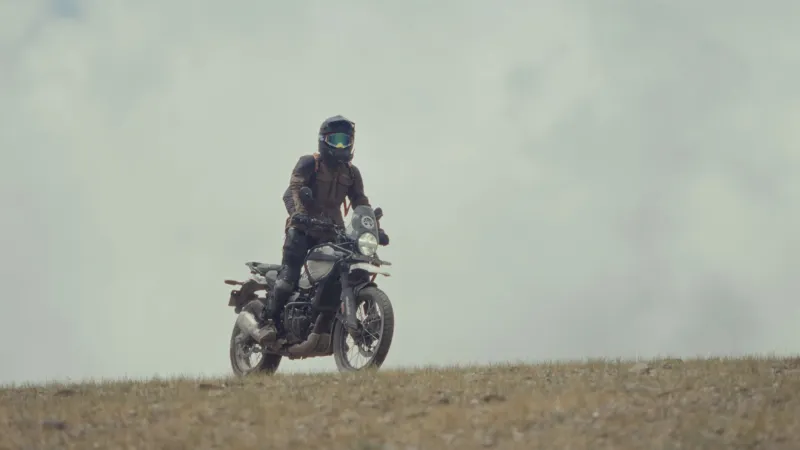
On open moorland, there is nowhere for the air to go but across the road. Grass, heather and roadside vegetation can give you a clue: if it is leaning hard in one direction, expect a push from that side. Flags, pylons, road signs and even the way rain is falling can help. On the coast, watch the water. Whitecaps and spray tell you the wind is serious before you feel it.
Bridges deserve their own paragraph. Open-deck bridges, viaducts and estuarine crossings often carry warnings for a reason. The wind can change character halfway across as you pass towers, parapets or expansion joints. Do not treat a bridge as a straight-line sprint. Keep your speed steady, leave room for the bike to move, and avoid staring at the barrier. Look where you want to go.
Your body is part of the suspension
When a gust hits, the instinct is to grip harder, stiffen up and lean into it. That is usually the opposite of what helps. A rigid rider transfers every shove straight into the steering. A relaxed rider lets the bike move underneath them and makes smaller, smoother corrections.
Keep your knees lightly gripping the tank, your elbows bent, your shoulders down and your hands loose enough that you can feel what the front tyre is doing. Stay central in the seat rather than hanging off to one side. If you are carrying luggage or a pillion, the bike has more sail area and more weight to move around, so give yourself even more room and even more time.
You will still need to lean into a crosswind, but do it progressively. Think of it as a steady offset rather than a wrestling match. If the wind is coming from your left, you may need a touch of left lean to hold your line, but do not overdo it. The gust will pass. If you are still leaning hard when it does, you will drift.
Be deliberately boring with the throttle
Exposed roads are not the place for sharp acceleration or late braking. Smooth throttle, smooth steering, smooth everything. A steady speed helps the bike settle and makes it easier to feel what the wind is doing. In strong gusts, a higher gear can soften the response and reduce the chance of the rear tyre breaking traction on a damp or gritty surface.
Leave a bigger gap than usual. Wind makes other vehicles unpredictable, and it makes your own braking less precise. If you need to slow down, do it early and gently. Avoid cruising right alongside another vehicle, especially a high-sided one.
Lorries, buses and the suck-and-push
High-sided vehicles are moving walls of air. As you approach one from behind, you can get a bow wave; as you draw alongside, the airflow changes; as you pass, the wake can shove you towards the lane line or the kerb. Oncoming lorries and buses can do the same from the opposite direction. The effect is worse on exposed roads and bridges where there is no shelter to break it up.
Do not sit in the blind spot or linger alongside. If you are going to pass, do it decisively, with plenty of space and a clear plan for where you will go if the bike gets pushed. After you pass, expect a buffet and be ready for it. Do not celebrate the overtake by relaxing your grip and your attention at the same moment.
Plan around the worst bits, not through them
If the Met Office is warning of damaging gusts, you do not have to prove anything. Pick a route that stays lower, uses hedged lanes and avoids the big exposed crossings where possible. A valley road may be slower and less dramatic, but it can turn a stressful day into a pleasant one. If you must cross a bridge, do it when the wind is forecast to ease, not at the peak of the warning.
Have bail-out points in mind. A café stop, a station car park, a friend’s house, a market town where you can wait out a squall. Flexibility is a riding skill. So is knowing when to turn around. A bike is a wonderful thing, but it is not a magic carpet, and no amount of experience makes a fifty-mile-an-hour crosswind on an exposed moorland road fun for long.
The wind is not the enemy
Britain gives us plenty of gusty days, and if we waited for perfect conditions we would hardly ride at all. The trick is to stop treating wind as a personal attack. Read the land, relax your body, keep the throttle steady, give high-sided vehicles a wide berth and plan a route that does not insist on the most exposed line. Do that, and a blustery day becomes just another part of the ride rather than a battle you are lucky to survive.