Bumps, Bills and Broken Confidence: What Britain's Roads Are Really Costing Riders
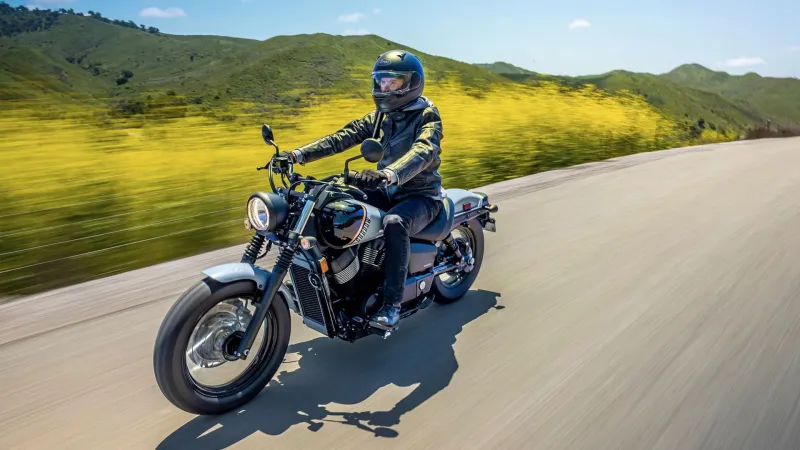
Photo: motorcycle pothole damaged UK road close up, via static1.topspeedimages.com
The road beneath us
There is a stretch of B-road near me that used to be a nice little run. Nothing dramatic — a few sweeping bends, a couple of villages, a decent pub at the end. This autumn it has become a slalom. The surface has been patched so many times that it looks like a bad weld. In the wet, the darker strips are slippery. In the dry, the edges of those patches are sharp enough to catch a front tyre. And somewhere between the second and third bend there is a crater that has been reported twice and filled once, badly.
That is the reality of riding in Britain in 2026. We are not talking about a few isolated defects. We are talking about a network that has been underfunded for years, patched in a hurry, and left to weather another winter. For drivers, it is an annoyance. For motorcyclists, it is a tax — on our wallets, our bodies and our confidence.
The bill arrives in pieces
A bent alloy wheel. A weeping fork seal. A cracked mudguard. A snapped number plate hanger. A puncture from a sharp-edged crater. None of these are exotic failures, and none of them are cheap. A replacement front wheel for a middleweight can run into hundreds of pounds before labour. Fork seals and suspension work add more. Then there is the insurance excess, the lost day off work, the recovery truck, the missed ride.
Riders have told us about the smaller costs too: the repeated tracking checks, the new tyre that had to be replaced early because a pothole bruised the sidewall, the £60 number plate bracket that seems to fail every other month. It adds up. And unlike a car driver, we cannot simply turn up the stereo and ignore the noise. We feel every defect through the bars, the pegs and the seat.
The injury side is worse. A pothole at 40 mph can throw a bike offline in a fraction of a second. Wrists, collarbones, ribs and knees take the hit. Even a near miss leaves a mark. Riders who have been commuting on the same road for years suddenly find themselves braking earlier, sitting up, scanning the tarmac instead of the corner. That loss of flow is hard to measure, but it is real.
Why riders pay more
Cars have four contact patches and a lot of metal between the road and the occupant. We have two contact patches, a short wheelbase and a rider who is exposed. A car can roll over a crater and let the suspension deal with it. A bike has to absorb the hit through a much smaller range of travel, and the rider absorbs the rest. If the suspension is set up badly, or the tyre is past its best, the margin disappears.
There is also a visibility problem. A pothole filled with water looks like a puddle. A patch of fresh tar looks like a shadow. A trench running along the middle of a lane can be invisible until the front wheel drops into it. In low sun, or after rain, the road surface becomes a guessing game. That is not a skill problem. It is a maintenance problem.
Setting up for damaged tarmac
You cannot suspension your way out of a broken road, but you can give yourself a better chance. Start with sag. If your bike is set up for a track day or for a rider who is much lighter than you, it will deflect off sharp edges instead of absorbing them. Check tyre pressures cold, and do not be tempted to run them rock hard in winter. A little compliance is your friend.
Compression damping is the next thing to look at. Too much and the bike skips over bumps; too little and it bottoms out. If your bike has electronic suspension, use the comfort or rain setting on bad surfaces. It feels soft, but soft is often faster when the tarmac is a mess. If you are constantly bottoming out, you may need stiffer springs or more oil — not more preload. And if your forks have not been serviced in a few years, get them looked at. Fresh oil and correct seals make a bigger difference than most riders expect.
Riding lines for broken roads
Look further ahead than you think you need to. Scan for dark patches after rain, shiny edges where a patch meets the original surface, and the tell-tale line of gravel that collects along the centre of a lane. Cross edge traps at as close to a right angle as you can manage. Do not grab a handful of front brake halfway through a pothole — unload the front, stand slightly on the pegs, keep your hands light and let the bike move underneath you. If you have to hit something, hit it straight, not leaned over.
In groups, leave more space. The rider in front may swerve without warning, and the rider behind may not see the reason. Ride your own line, not the line of the person ahead. And if a road is genuinely dangerous, turn around. There is no prize for finishing a route that has stopped being fun.
Report it, then report it again
Every defect that goes unreported is a defect that stays. Use FixMyStreet or your council's highways portal. Take photographs with something for scale — a boot, a glove, a bank card — and note the depth and width. Report the same spot again if nothing happens. Keep receipts for damage and ask about a claim. It is not glamorous, but it works more often than riders think.
Beyond that, support the organisations that lobby for better roads. The Motorcycle Action Group and the British Motorists Federation — and the British Motorcyclists Federation — have long argued that riders are disproportionately affected by poor maintenance. Respond to consultations. Turn up to council meetings. Talk to your MP. The pothole tax is not inevitable. It is a choice, and choices can be changed.
The ride we want back
Nobody expects perfect tarmac everywhere. We ride old roads because they have character. But character should not mean craters. A properly maintained B-road is not a luxury — it is the difference between a rider who arrives home buzzing and a rider who arrives home with a bent wheel and a shaken confidence. In 2026, that difference is being decided by budgets and priorities. Riders should be part of that conversation, not just the ones paying for it.